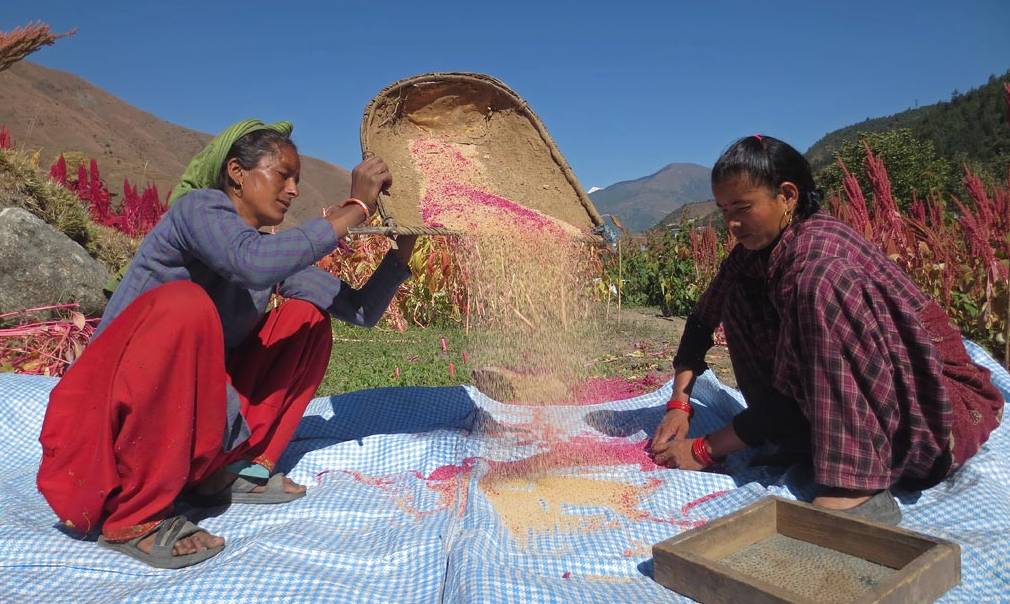
Amaranth in Nepal
In the Himalayan region, particularly Nepal, amaranth is a traditional, climate-resilient crop that grows well in low-rainfall, high-altitude environments. It is a nutritious staple eaten during lean periods and during religious fasting, as it is considered pure.
Organizations like LI-BIRD work in the Himalayas to collect and evaluate landraces of amaranth to enhance food security, collaborating with national research councils and international bodies.
Projects are underway in the Himalayas to promote indigenous, climate-resilient crops like grain amaranth and buckwheat to help local farming communities adapt to climate change.
Amaranth is cultivated for both its grains and leaves. The grains are popped and mixed with honey, or milled into flour for bread, porridge, and cookies. The leaves, known as latta ko sag, are a popular, iron-rich leafy vegetable. It is hardy and drought-tolerant, making it ideal for the dry, mountainous regions of Nepal similar to the Andes. It is often grown in high-altitude terrains, with sowing in March/April and harvesting in October.Cultural Significance: Amaranth is associated with purity in Nepalese culture and is often used during religious fasts.
Over 35 tons are exported annually from the Doti district of Nepal to India. It is being promoted by organizations like LI-BIRD as a valuable nutritional source to replace processed food.